
33 Per Cent Decrease in Animal Smuggling Cases Recorded in 2025
- 28 animal smuggling cases involving pet animals and wildlife for pet trade detected in 2025, down from 42 in 2024
- Protecting public health and safety, as well as animal welfare, remains a key consideration in combatting animal smuggling
The National Parks Board (NParks), in coordination with partner agencies including the Immigration & Checkpoints Authority (ICA), detected a total of 28 cases of animal smuggling in Singapore in 2025 - a 33 per cent decrease from the 42 cases recorded in 2024. This continues a downward trend from previous years, which saw 35 cases in 2023 and 34 cases in 2022. The cases detected in 2025 involved pets as well as wildlife for pet trade, such as dogs, cats, fish, birds, and scheduled species under the Convention on International Trade in Endangered Species of Wild Fauna and Flora (CITES). Out of the 28 cases, eight led to court charges, while 20 resulted in composition fines being issued to offenders, including buyers.
Animal smuggling compromises public health and safety, as well as animal welfare
2. Animal smuggling not only harms the individual animals but also poses broader risks to public health and safety. Many smuggled animals may carry infectious and contagious diseases, either contracted at their place of origin or from other animals during transit. These diseases can threaten native wildlife, resident pets, and even humans.
3. An example of a disease that poses serious risks to humans, pets and native wildlife is rabies – a zoonotic disease that has a 100% fatality rate once symptoms appear. Singapore has remained rabies-free since 1953, a status maintained through strict import requirements and strategic ongoing vaccination programmes. Animals that bypass these import requirements present a significant biosecurity risk, underscoring the need for continued vigilance to prevent the virus from being reintroduced.
4. Smuggled animals are often transported in cramped, poorly ventilated conditions, severely compromising their well-being. In some cases, the animals are heavily sedated to minimise noise and movement to avoid detection by the authorities. The cramped conditions during transit also increases contact between individual animals, further exacerbating the risk of disease transmission. As a result, many animals suffer from injuries, poor health, and in some cases, death.
Puppies smuggled in cramped conditions found to be carrying highly contagious viruses
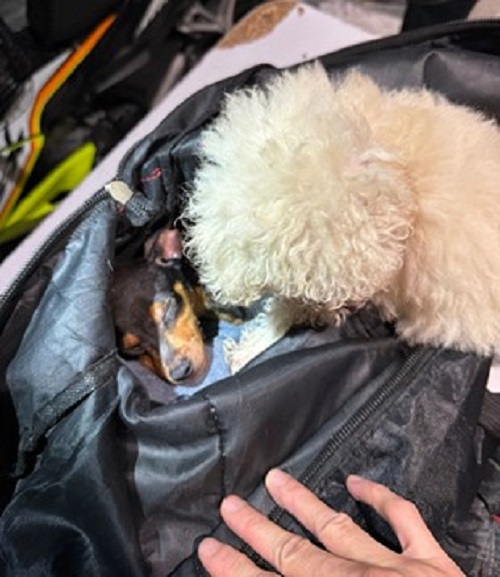
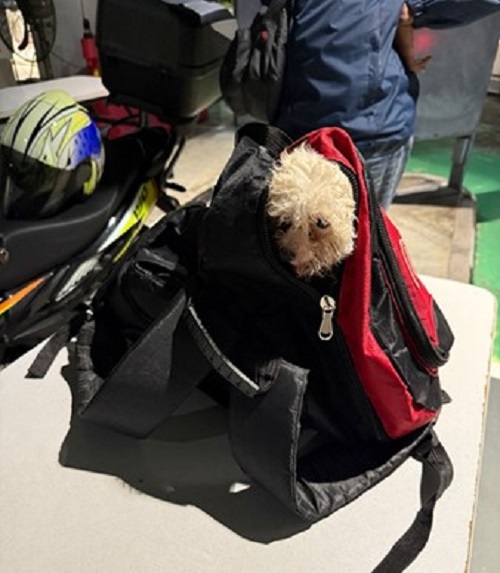
5. In March 2025, a man was caught attempting to smuggle three puppies through Tuas Checkpoint. The puppies were hidden in a backpack and placed in the rear storage compartment of his motorcycle. At the point of discovery, the puppies appeared drowsy and quiet, suggesting they had been sedated. The backpack was unsuitable for transporting dogs, restricting their movement and providing inadequate ventilation, which likely caused significant discomfort for the puppies during transport. All three puppies tested positive for Canine Parvovirus, and one tested positive for Canine Distemper virus – both highly contagious viruses that can result in severe health complications and/or death. The puppies subsequently recovered after receiving medical treatment and care, and were subsequently rehomed through NParks’ rehoming partners. The man was later sentenced to 18 weeks’ imprisonment.
Illegal wildlife trade threatens survival of endangered species
6. The illegal wildlife trade threatens the survival of endangered species and contributes to habitat destruction around the world. As a signatory to the Convention on International Trade in Endangered Species of Wild Fauna and Flora (CITES), Singapore is committed to international efforts to combat illegal wildlife trade to ensure the long-term survival of these species.
Death of White-rumped Sharma from poor conditions during smuggling attempt
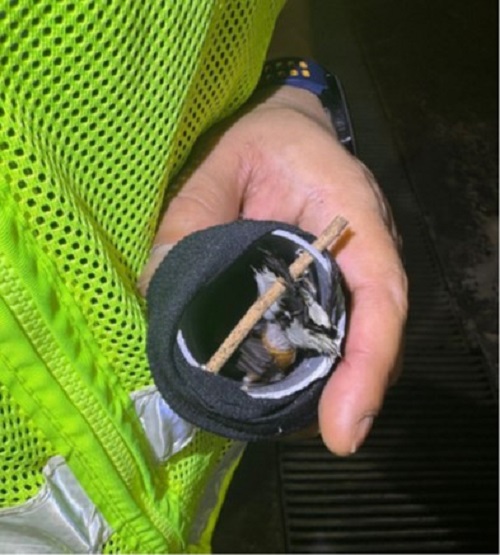
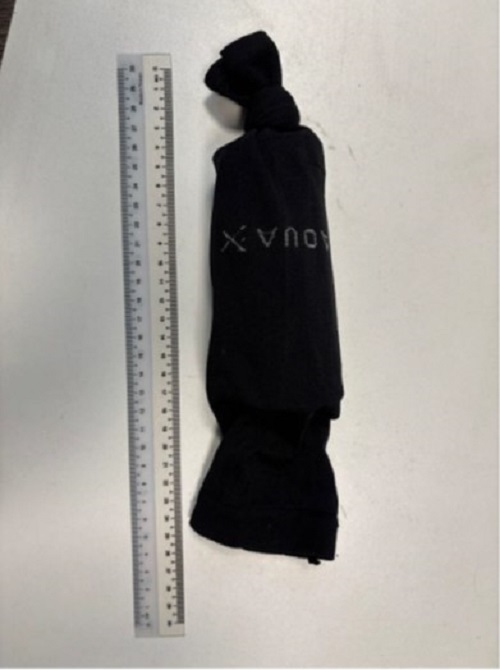
7. In October 2025, a man was arrested for attempting to smuggle a White-rumped Shama (Copsychus malabaricus) from Malaysia through Woodlands Checkpoint. To avoid detection, he confined the bird in a cylindrical plastic tube, sealed both ends with cloth, and concealed it in a jacket bag. The bird was not provided with food or water and was kept in these conditions for at least 1.5 hours, during which it likely experienced significant discomfort and suffering. The bird subsequently died on the same day. The man did not possess the required CITES import permit for the White-rumped Shama, which is a scheduled species under Appendix II of CITES. He was later sentenced to 4 weeks’ imprisonment.
Three of six trafficked primates found dead upon detection in Singapore
8. In November 2025, NParks was alerted to several pieces of luggage transiting through Singapore that contained approximately 2,500 Red-Eared Sliders (Trachemys scripta elegans), six Common Marmosets (Callithrix jacchus), a CITES Appendix II species, an albino raccoon (Procyon lotor), one Sulawesi Myna (Basilornis celebensis), two White-Necked Mynas (Streptocitta albicollis) and four Yellow-Faced Mynas (Mino dumontii). The animals were found in poor condition and several – including three marmosets and the four Yellow-Faced Mynas – were dead upon arrival in Singapore. The surviving Red-Eared Sliders tested positive for Salmonella and were humanely euthanised due to public health and safety concerns. Investigations for this case are ongoing.
Adopting a zero-tolerance stance against animal smuggling
9. The Government takes the smuggling and illegal trade of animals seriously and will take the necessary and appropriate enforcement action against offenders, regardless of the type and number of animals being smuggled.
10. At the checkpoints, the efforts of ICA officers – who are trained to detect suspicious travellers and vehicles – coupled with the use of technology, have contributed to the detection of numerous animal smuggling cases in 2025. ICA officers use mobile x-ray scanning machines, such as the Z Backscatter van, to identify hidden modified compartments in cargo lorries, cars and motorcycles. ICA’s Integrated Targeting Centre (ITC) further strengthens these efforts by conducting pre-arrival risk assessments to thwart smuggling attempts. By leveraging advance information and data analytics, the ITC flags high-risk vehicles and cargo for enhanced checks, even when there are no overt signs of suspicious behaviour.
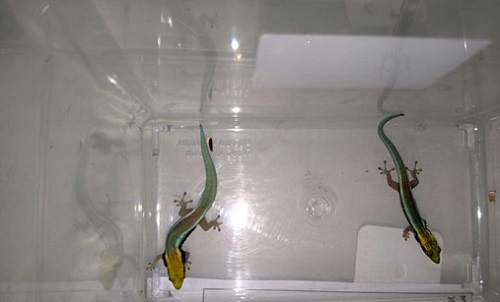
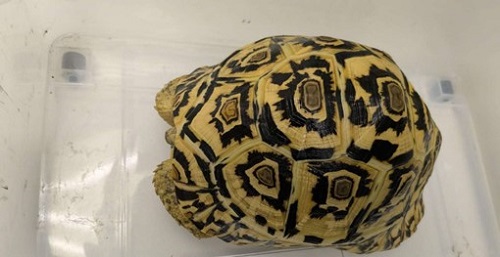
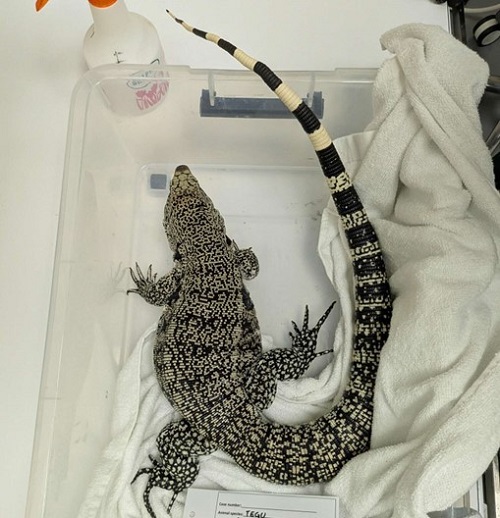
11. In addition to border surveillance, NParks also regularly monitors physical and online marketplaces and takes appropriate enforcement actions against perpetrators. For example, in October 2025, NParks successfully carried out a series of coordinated raids across Singapore in support of INTERPOL’s Operation Thunder, targeting individuals suspected of engaging in illegal wildlife trade through online platforms such as Telegram. The raids resulted in the seizure of 16 wildlife specimens, including endangered species listed under CITES such as Yellow-headed Day Geckos (Phelsuma klemmeri), a Leopard Tortoise (Stigmochelys pardalis), a Spiny-tailed Monitor (Varanus acanthurus) and an Argentine Black and White Tegu (Salvator merianae).
12. The Government takes a zero-tolerance stance on the illegal trade and import of pet animals and wildlife. Under the Animals and Birds Act, offenders caught importing any animal or bird without a licence may be fined up to $10,000, jailed for up to 12 months, or both. The illegal trade of wildlife, including non-CITES species, is regulated under the amended Wildlife Act. Under the Wildlife Act, a person must not offer for sale, sell or export any wildlife (whether alive or dead), or any part of a wildlife, unless the person has the Director-General’s written approval to do so. Any individual found to have violated the laws may be fined up to $50,000, jailed up to two years, or both.
13. Under the Endangered Species (Import and Export) Act, the penalties for an individual, for the illegal import of any CITES Appendix I specimens such as Asian Arowanas and Indian Star tortoises, is a maximum fine and maximum imprisonment term up to $100,000 per specimen (not exceeding aggregate of $500,000 or the market value of all specimens at the material time, whichever is higher) and six years. For CITES Appendix II and III specimens such as Leopard tortoises and Reticulated pythons, the maximum fine and maximum imprisonment term is $50,000 per specimen (not exceeding aggregate of $500,000 or the market value of all specimens at the material time, whichever is higher) and four years.
Public can help safeguard animal health and welfare, and public health
14. Given the threats that smuggling and illegal trade of pets and wildlife pose to animal health and welfare, as well as public health, NParks strongly encourages prospective pet owners to adopt from animal welfare groups or purchase pets only from licensed pet shops. Members of the public should not purchase pets from unlicensed sources (e.g. social media or online platforms), as the health status of these animals are unknown. Furthermore, such animals may not have been bred in accordance with the animal health and care standards imposed by NParks on licensed breeders and pet shops.
15. “Animals smuggled into the country often come from unknown sources, and may carry contagious diseases that pose risks to both humans and other animals. To avoid detection, these animals are usually smuggled in cramped conditions which compromise their health and welfare – sometimes resulting in infection from close contact with sick animals during transit, or death. Combatting animal smuggling requires a multi-pronged approach. NParks works closely with ICA and other partner agencies to strengthen surveillance and enforcement efforts aimed at deterring the illegal trade of pets and wildlife. Beyond enforcement, the community also has a crucial role to play. For example, veterinarians can help identify and report suspected cases of smuggled animals to NParks when these animals are brought under their care, while businesses and the public can also do their part by not contributing to the demand for illegally imported animals,” said Ms Jessica Kwok, Group Director of Enforcement & Investigation, NParks.
16. Those with information on suspected poaching, smuggling or illegal trade of pet animals and wildlife can report them to NParks via our website at www.avs.gov.sg/feedback (for pets) cites@nparks.gov.sg (for wildlife),or call us via our Animal Response Centre at 1800-476-1600.
17. Safeguarding Singapore’s borders remains a top priority for ICA. ICA will continue to work with the relevant authorities to detect and deter attempts to smuggle illegal goods and items through Singapore’s checkpoints.
IMMIGRATION & CHECKPOINTS AUTHORITY
NATIONAL PARKS
13 FEBRUARY 2026
Annex – Notable examples of animal smuggling cases detected in 2025
| Case Details | Photos |
On 1 March 2025, Immigration & Checkpoints Authority (ICA) officers at Tuas Checkpoint conducted an inspection on a motorcycle. During the inspection, ICA detected three puppies concealed in a backpack and placed within the rear storage compartment of the vehicle. The case was then referred to NParks for further investigation. At the time of discovery, the puppies were found to be sleepy and quiet when they were removed from the bag, indicating that they were likely to have been sedated. All dogs tested positive for Canine Parvovirus and one dog tested positive for Canine Distemper virus. The puppies subsequently recovered and were rehomed. The rider was sentenced to 18 weeks’ imprisonment. (Photo credit: Immigration & Checkpoints Authority) |
|
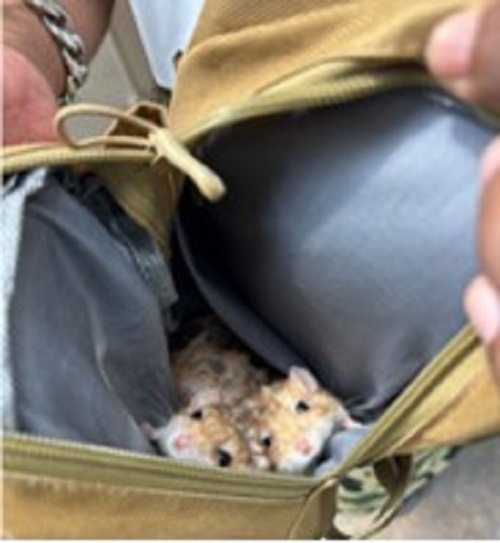
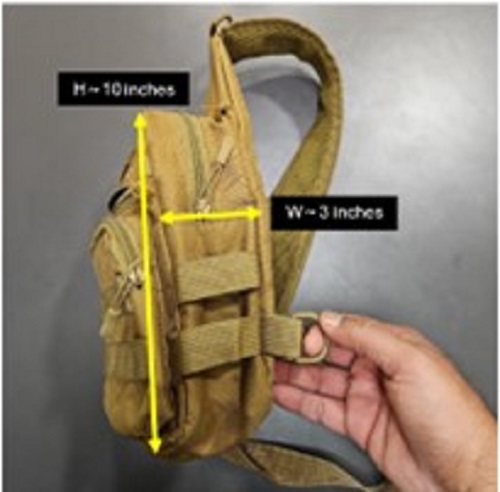
On 10 February 2025, ICA officers at Tuas Checkpoint conducting a routine inspection detected four gerbils inside a vehicle. The case was then referred to NParks for further investigation. In addition to the gerbils, the second man had also sold a total of three geckos and three Ball Pythons (Python regius) to a family in Singapore. While the gerbils were rehomed, the geckos and pythons died due to improper care. The second man was fined $9,000 for his involvement, while the first man’s case is still before the courts. (Photo credit: Immigration & Checkpoints Authority) |
|
On 31 October 2025, ICA officers at Woodlands Checkpoint conducted a routine inspection on a Malaysian-registered motorcycle. During the inspection, the officers detected a tube, which was tied and sealed with a layer of cloth within a jacket bag. Upon further inspection, a White-rumped shama (Copsychus malabaricus) was discovered inside the tube. The case was then referred to NParks for further investigation. White-rumped shamas are a scheduled species listed under Appendix II of CITES. The motorcycle rider did not possess the requisite CITES import permit for the White-rumped shama. Furthermore, the manner in which the bird was transported likely caused the bird significant discomfort and suffering, and it eventually died on the same day. The rider was sentenced to 4 weeks’ imprisonment. (Photo credit: Immigration & Checkpoints Authority) |
|
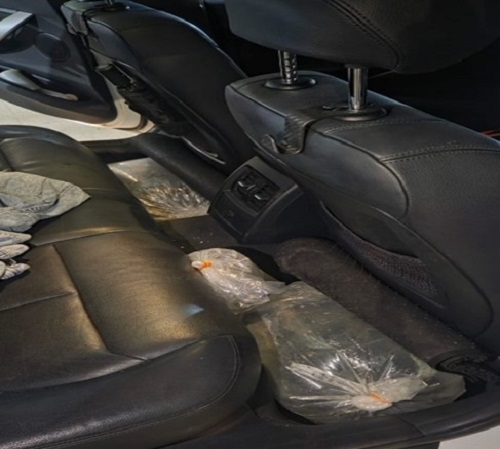
On 14 October 2025, ICA officers at Woodlands Checkpoint in Singapore conducted a routine inspection on a Malaysian-registered vehicle driven by a male Singaporean. During the inspection, they detected two Asian Arowanas (Scleropages formosus) along with three ornamental fishes placed on the floorboards of the passenger seats, covered by floormats. The case was then referred to NParks for further investigation. Asian Arowanas are a scheduled species listed under Appendix I of the CITES. Commercial trade in this species is permitted only if they are bred from CITES-registered farms. The man was sentenced to two weeks’ imprisonment. (Photo credit:bImmigration & Checkpoints Authority) |
|
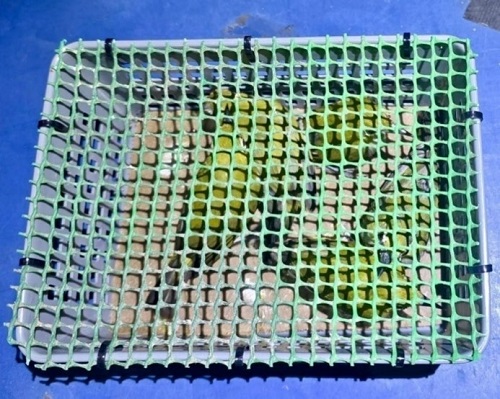
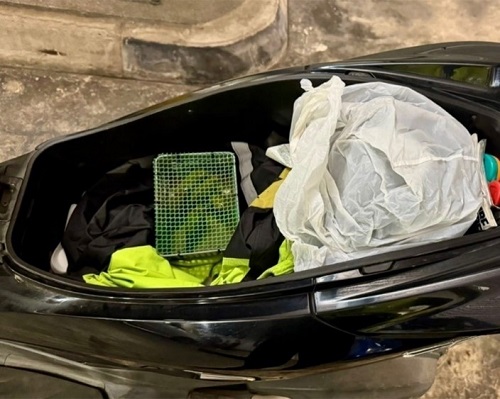
On 6 December 2025, ICA officers at Woodlands Checkpoint were conducting an operation and detected five Indian White-eye birds (Zosterops palpebrosus) concealed in a netted plastic basket hidden inside a raincoat and placed in a motorcycle’s seat compartment. The case was then referred to NParks for further investigation. The birds were eventually rehomed through NParks’ rehoming partners. |
|
On 25 November 2025, NParks was alerted to several pieces of luggage transiting through Singapore, which contained around 2,500 Red-Eared Sliders (Trachemys scripta elegans), six Common Marmosets (Callithrix jacchus), an albino raccoon (Procyon lotor), one Sulawesi Myna (Basilornis celebensis), two White-Necked Mynas (Streptocitta albicollis) and four Yellow-Faced Mynas (Mino dumontii). Several of them were found dead upon arrival in Singapore. The surviving Red-Eared Sliders tested positive for Salmonella and all had to be humanely euthanised due to public health and safety concerns. The surviving marmosets and raccoon are being cared for at the Centre for Wildlife Rehabilitation, while the mynas, which tested negative for avian influenza, will be rehomed. (Photo credit: National Parks Board) |
|
On 9 October 2025, NParks successfully carried out a series of coordinated raids across Singapore in support of INTERPOL’s Operation Thunder, targeting individuals suspected of engaging in illegal wildlife trade through online platforms such as Telegram. The raids resulted in the seizure of 16 wildlife specimens, including endangered species listed under CITES such as Yellow-headed Day Geckos (Phelsuma klemmeri), a Leopard Tortoise (Stigmochelys pardalis), a Spiny-tailed Monitor (Varanus acanthurus) and an Argentine Black and White Tegu (Salvator merianae). (Photo credit: National Parks Board) |
|
-seized-from-the-vehicle.jpg?sfvrsn=2fdcf63e_4)
-found-in-luggage-transiting-through-singapore.jpg?sfvrsn=86d1037a_4)
.jpg?sfvrsn=9926dbf3_4)